The Équité Luxury Report 2026 to 2030: Prof. Dr. Daniel Langer on the Five Years That Will Decide Luxury
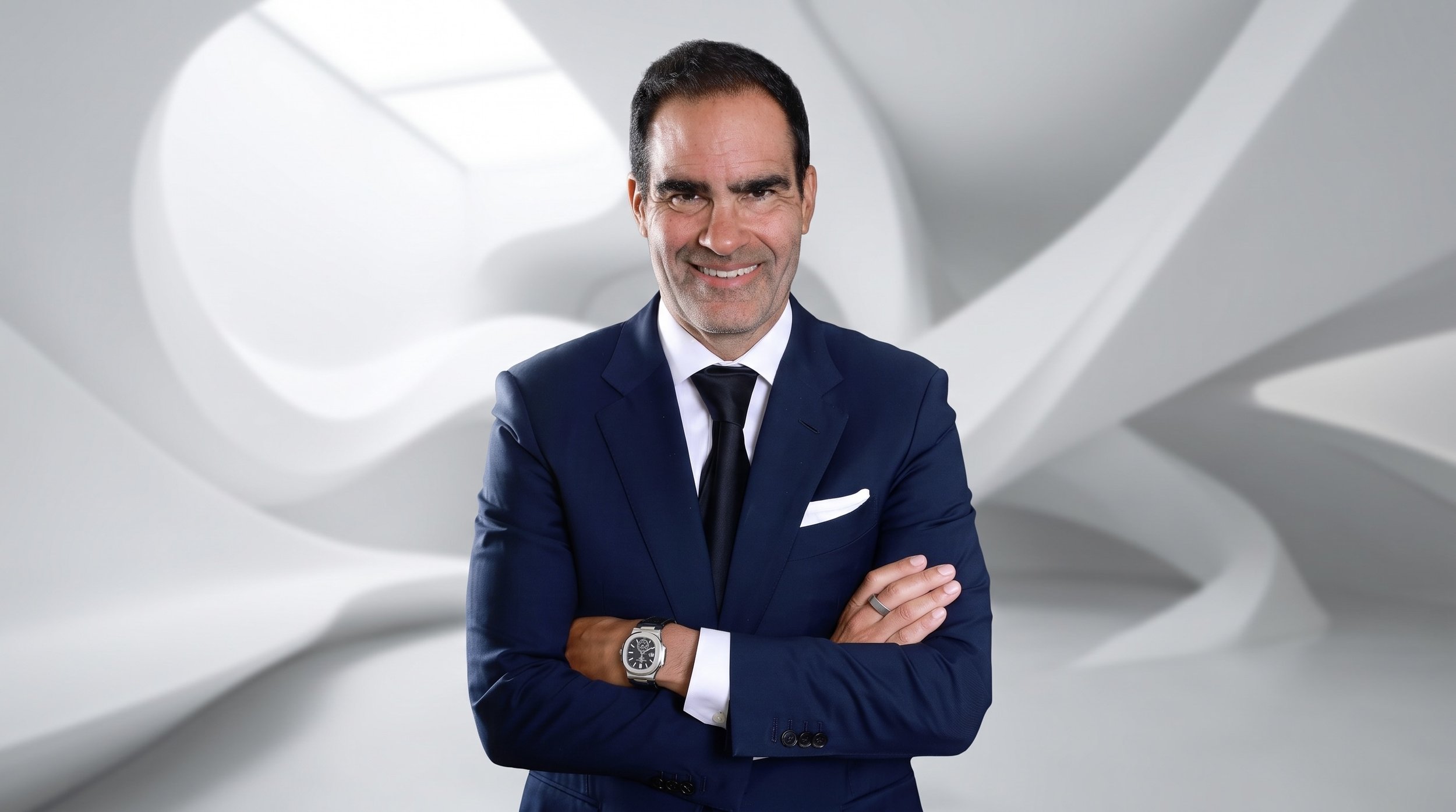
Prof. Dr. Daniel André Langer is one of the world's foremost authorities on luxury, recognized globally for shaping the future of brand strategy, client experience, and extreme value creation. As Chief Executive Officer of Équité, a global strategy consultancy specializing in the luxury, lifestyle, premium, and hospitality sectors, he has advised some of the world's most iconic brands, transforming their storytelling, strategy, and client experience, enhancing brand equity, and driving significant profit growth. He serves as Executive Professor of Luxury Strategy at Pepperdine University and as a Luxury Professor at NYU. A best-selling author of luxury management books in English and Chinese and a top-five global luxury key opinion leader, his research into the psychology of ultra-high-net-worth individuals has redefined how brands create emotional value. His work has been featured in The Wall Street Journal, the Financial Times, The Economist, the New York Times, Robb Report, the South China Morning Post, and on international television including BBC and Bloomberg.
We sat down with Prof. Dr. Daniel Langer to discuss the findings of the inaugural Équité Luxury Report, and what the next five years will demand of luxury brands.
Question: Your report is titled The Cost of Waiting. Most industry outlooks right now read the softness as a cyclical dip. You are arguing something else entirely. What are you seeing that the consensus is missing?
Prof. Dr. Langer: The consensus is applying the 2009 template to a situation that has very little in common with 2009. Back then, the industry faced a financial shock that was transmitted into the real economy. It hit demand broadly, credit normalized, confidence returned, and demand came back. Everyone contracted together, and then most players recovered together.
What is happening now is a very different kind of event. Luxury is shrinking and redistributing at the same time, and the redistribution is the part almost no one is pricing in with enough urgency.
Wealth has concentrated at the very top, while the aspirational consumer who powered much of the last two decades of expansion has moved on. China has matured from an engine of automatic growth into one of the most sophisticated and competitive luxury markets in the world. A new generation buys on its own terms. Trust sits near an all-time low at the exact moment expectations have never been higher.
None of that reverses when the current geopolitical disruption fades, because none of it was caused by that disruption. The disruption only made visible what was already there.
That is the whole argument. A market that is down can come back. A market that has changed does not return to its previous form. The difference will decide which brands are still shaping the category in 2030, and which ones are simply managing decline.
Question: You revised your own forecast this year. Walk me through that, because it matters for how much weight a reader should put on the numbers.
Prof. Dr. Langer: At the start of 2026, my outlook was for low single-digit growth, broadly in line with the prevailing analyst consensus. Then the Iran war began in late February, and the first half of the year absorbed a sharp shock: the closure of the Strait of Hormuz, oil briefly above one hundred dollars, a collapse in Gulf tourism, an energy cost spike concentrated in Europe and Asia, and a large-scale departure of foreign residents from Gulf cities.
As a result, I moved the personal luxury goods forecast to a contraction of 2 to 4 percent in 2026. I want to be direct about the uncertainty in that figure. The durability of the June ceasefire framework is the single largest swing factor, and a breakdown would push the recovery out by twelve to eighteen months.
But here is the part that matters more than the precise number. The structural argument is robust to the geopolitical path. Whether the war resolves cleanly or not, the fundamentals deficit, the bifurcation, the China shift, and the forces reshaping the luxury environment all remain.
Geopolitics changes the depth of the trough and the timing of the recovery. It does not change the structural reality underneath.
Question: If the war is only an accelerant, what is the actual cause?
Prof. Dr. Langer: The actual cause is an accumulated deficit in brand fundamentals that two decades of growth allowed brands to defer.
Let me put a number on it, because it makes the point uncomfortable. Our estimate is that roughly 70 to 80 percent of luxury market growth between 2023 and 2025 came from price increases rather than volume. Most brands raised prices on largely unchanged products without a commensurate improvement in quality, creativity, storytelling, or client experience.
That is not creating new desire. That is extracting more from existing desire, and it is a finite strategy. It works until the gap between price and perceived value becomes undeniable. Then it reverses violently, because every price increase that was not earned becomes a reason to leave.
The aspirational consumer who funded much of that growth did not stop buying. They moved to elevated midmarket brands that delivered the value many luxury houses promised and failed to provide. Our estimates now indicate that elevated midmarket has overtaken luxury as fashion's main economic profit creator for the first time on record. This is a brand problem. It does not resolve when the macro environment improves.
Question: Your 2027 forecast is flat. You call it the most important number in the report. Why?
Prof. Dr. Langer: Because a naive reading of a resolving war would expect a strong 2027 rebound. The fact that there is no rebound is the proof point.
As the geopolitical overlay fades, the underlying forces reassert themselves as the dominant drivers, and the result is stagnation. The recovery a resolving war would predict does not arrive.
A flat year in the absence of any acute external cause is the clearest evidence that the contraction is structural. If it were cyclical, 2027 would bounce. It does not. That single data point is worth more than any argument I could make in prose.
Question: Same region, same category, same quarter: one brand grows double digits while another declines sharply. If conditions are identical, what explains the gap?
Prof. Dr. Langer: Brand strength, and nothing else.
This is the most important fact about the current market. The environment is no longer the variable. When two brands face genuinely similar conditions and one grows while another collapses, the market has been removed from the equation. What is left is the brand. My analysis is that across most categories, fewer than 5 percent of brands demonstrate the long-term vision and brand-equity discipline that produces meaningful growth through a period like this. Another 10 to 15 percent are well managed without being exceptional. The remaining 80 to 85 percent carry significant deficits in exactly the dimensions that decide luxury brand strength.
The winners share three traits, and all three are operational rather than declarative, which is exactly why so few brands have them.
First, they have a differentiated story with an authentic point of view that the brand can defend operationally. Hermès has a real craft and scarcity story because the quotas are enforced. Brunello Cucinelli has a real story about place because Solomeo exists. The losing brands tell category stories: heritage, craftsmanship, country of origin. Those are not points of view. They are table stakes. A category story collapses the moment category demand softens.
Second, they have a client experience delivered through systems rather than luck. When a brand's magic depends on which store you walk into, which associate you meet, or which property you visit, the brand does not have an experience. It has a lottery, and the discerning client notices the inconsistency immediately.
This is where many brands confuse service with experience. Service is about performing tasks well. Experience is about creating emotional memory. A beautiful store, a polite greeting, a glass of champagne, or a smooth transaction are expected. They do not create distinction on their own. The strongest brands know precisely what clients should feel, how those feelings should be created, and how every touchpoint should reinforce the brand's story.
Third, the winners have a value equation that genuinely exceeds the price. Being expensive is not the same as being luxury. The client knows the difference the moment they walk in.
Question: You devote your longest chapter to China and open it by saying the received wisdom is wrong. What is the received wisdom, and what is actually happening?
Prof. Dr. Langer: The received wisdom is that Chinese luxury is collapsing. It is not collapsing. It is being redistributed, across geography, across brands, across categories, and across generations, all at once. Collapsing those redistributions into a single Mainland China number hides the one thing brands most need to see.
Take geography first. Before 2020, Chinese consumers made most of their luxury purchases outside the mainland. The pandemic forced that spending home, Mainland China numbers surged, and many brands read the surge as demand. It was repatriation. When borders reopened, the pattern reversed, mainland numbers fell, and many brands read the fall as demand collapse. It was geography reverting to its historical pattern.
So the right metric is not mainland revenue. It is Chinese consumer wallet share, measured globally, wherever the purchase happens. A brand whose mainland revenue rises because travel is constrained, while its global share of the Chinese wallet quietly erodes to local competitors, is in serious trouble that the mainland number completely hides. Brands managing to the mainland figure are managing to an illusion.
And underneath the geography is the redistribution that actually matters. The share of Chinese luxury spending going to Chinese brands has grown dramatically, and it is not coming back. Automotive is the leading edge and the clearest warning. The combined share of the four dominant German luxury car brands in the Chinese electric segment has fallen below two percent. A Chinese technology brand's performance car set a faster track time than the flagship of a legendary German sports marque at roughly a quarter of the price.
The cultural authority that Western luxury automotive relied on for forty years in China has evaporated, and it is not returning. Automotive is the leading indicator. Every category that thinks itself safe should study it.
Beauty first, then automotive, then ready-to-wear and footwear, with leather goods and watches the next frontier rather than a permanent safe harbor. And here is the part Western brands most resist hearing: Chinese brands are not winning only on price. They are winning on meaning. They compete on storytelling, client experience, and cultural relevance, the exact dimensions on which many Western houses spent a decade allowing their advantage to erode. Category authority is no defense, because category authority is gone.
Question: How will AI change the way clients evaluate luxury brands?
Prof. Dr. Langer: AI will accelerate the exposure of weak storytelling.
Luxury brands are used to controlling the narrative through campaigns, retail environments, celebrity amplification, and selective distribution. But clients are increasingly entering an AI-mediated reality, where intelligent systems summarize sentiment, compare alternatives, evaluate value, and surface the most credible signals around a brand.
That changes the rules. Heritage will not automatically protect a brand. Visibility will not automatically translate into desire. Brand claims will matter less than the evidence surrounding them: client advocacy, cultural relevance, product credibility, consistency of experience, expert commentary, community sentiment, and the strength of the brand's meaning across the digital ecosystem.
In this environment, weak brands become more vulnerable. If a brand says it is exceptional but clients experience inconsistency, AI will surface the inconsistency. If a brand claims heritage but cannot connect that heritage to today's cultural relevance, AI will not create relevance on its behalf. If a brand raises prices without creating more value, clients will have more tools to see the gap.
AI will not kill luxury storytelling. It will punish generic storytelling. It will reward brands that have earned credibility in the places clients actually trust.
Question: You forecast a return to the 2023 peak around 2030. If the market gets back to where it was, why should any brand feel urgency?
Prof. Dr. Langer: Because the aggregate recovery is a trap.
The recovery is real, but it is sub-trend, and above all, it is concentrated. The brands that built fundamentals lead it. The brands that did not will continue to lose share even as the aggregate recovers.
This is the part leaders miss when they see a headline number climbing back toward the peak. An industry-level recovery will not rescue an individual brand that has not earned its place. The tide that used to lift everyone is gone.
Beginning the foundational work in 2026 is existential. The work takes years, and each year of delay widens the gap with the brands that acted. The brands that wait for the contraction to pass will discover that it does not pass in the way they expected. They may spend the recovery falling further behind.
Question: You use the phrase extreme value creation throughout the report. You are deliberate about the word "extreme." Why not simply "value creation"?
Prof. Dr. Langer: Because the bar has moved, and the language has to move with it.
For two decades, it was often enough to be good. It was enough to meet the expectations of a client who was willing to extend the benefit of the doubt to a heritage name. That client is gone. The client now has expectations at an all-time high and trust at an all-time low. They inform themselves through channels the brand does not control. They have more credible alternatives than ever. And after years of paying more for less, they can see the gap between price and value instantly.
For that client, meeting expectations is invisible. Only exceeding them, dramatically and unmistakably, registers at all.
The second mistake leaders make is believing that extreme value creation can be asserted from inside the building. Leaders assess their own brand from the internal view: the heritage they are proud of, the craftsmanship they know is real, the archive they can point to, the creative intention they believe in. From that perspective, the value often seems self-evident. But value is not self-evident. It is only real if the client perceives it. The client's perception is the only court in which the verdict counts.
Question: Close it for me. A leadership team reads this report. What is the one thing you want them to do differently on Monday morning?
Prof. Dr. Langer: Stop believing they have time.
I have a version of the same conversation more often than any other. An intelligent, experienced, genuinely committed leadership team, convinced the market has softened through a phase, planning to refine the assortment, refresh the marketing, bring in new creative energy, and wait for conditions to improve.
They believe patience is a strategy. It is not. Structural change does not reward patience. It rewards action, and it punishes the belief that there is time. So on Monday morning, my guidance is to run an honest audit of the three fundamentals: the story, the experience, and the value equation, measured from the client's side rather than the boardroom's. Then begin the multi-year work on whichever is weakest, starting immediately.
There is no version of the next five years in which waiting is rewarded. The brands that win the next decade will be the ones that build genuine meaning, genuine distinction, and value the client can feel, while their competitors keep refining the assortment and waiting for a phase to pass.
If you cannot make a client dream, you will not make them pay. That is the whole report in a single line, and it is the line I would leave on the table.
Daniel Langer publishes ongoing analysis on the future of luxury on his Substack and on Instagram